
H–Cu vacancy co-segregation and H diffusion in Cu grain boundaries

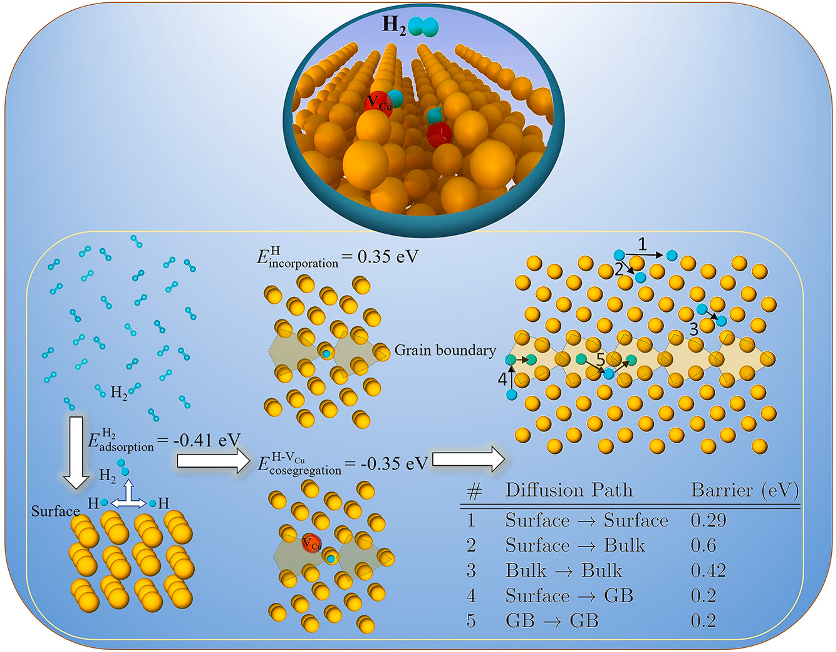
Hydrogen embrittlement weakens copper used in electronics and structures, but the exact cause is not fully understood. This study uses advanced computer simulations to track how hydrogen atoms enter copper, move through it, and interact with defects. It finds that hydrogen gathers at weak spots such as grain boundaries and vacant atomic sites, where it moves easily and forms stable clusters. These clusters make it easier for defects to accumulate, gradually damaging the material. The results explain how exposure to hydrogen leads to early stages of failure in copper, helping guide the design of more durable and reliable materials for technological applications.
Authors: V. Fotopoulos and A. L. Shluger