
Research Highlights

- Strain and dopant-induced band-gap formation in metastable ZrO: resolving the experiment-simulation discrepancy
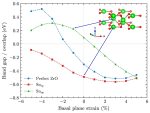 Junting Zhang, Susannah Lea, Johannes Lischner, Andrew Horsfield, Mark Wenman The uranium dioxide fuel in nuclear reactors is used in the form of stacks of ceramic fuel pellets. These pellets are sealed in zirconium alloy tubes to protect them and prevent fission product release. The zirconium can react with the surrounding water to form an outer layer of zirconium oxide (ZrO2). The region between the… Read more: Strain and dopant-induced band-gap formation in metastable ZrO: resolving the experiment-simulation discrepancy
 - ZIF-8 microcapsule with single-pore supporting Au nanoparticles inside for efficient cascade catalysis
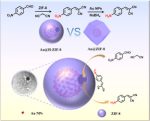 Researchers from QMUL, Hebei University of Technology and Huzhou University built a hollow nanocapsule, a porous shell with a single opening and gold nanoparticles fixed inside, that runs a two-step chemical reaction in one pot, converting a model molecule with 99% efficiency and negligible loss of activity after repeated use. The group of Dr Devis Di Tommaso at QMUL used quantum-chemical calculations to reveal, at… Read more: ZIF-8 microcapsule with single-pore supporting Au nanoparticles inside for efficient cascade catalysis
 - Conditional generative models enable targeted exploration of MAX phase design space
 Researchers at UCL, AWE and collaborators have developed an artificial intelligence approach to accelerate the discovery of new MAX phases, a family of layered materials used in applications ranging from energy technologies to advanced coatings. MAX phases are also precursors to MXenes, an exciting class of two-dimensional materials with potential uses in energy storage, catalysis and electronics. The team adapted a large language model, CrystaLLM-π,… Read more: Conditional generative models enable targeted exploration of MAX phase design space
 - Correlation-driven phonon renormalization and the equation of state of 𝛾-cerium
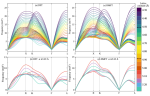 Cerium is one of the strangest metals in the periodic table. Cool it down or squeeze it, and it can suddenly collapse by about 15% in volume — then warm it back up and it swells out again, all without ever changing its crystal structure. Physicists have puzzled over this behaviour for decades, because it comes down to the collective quantum behaviour of the metal’s… Read more: Correlation-driven phonon renormalization and the equation of state of 𝛾-cerium
 - On the role of crack electrolyte wetting in the degradation and performance of battery active particles
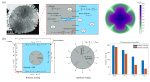 The paper shows that cracks in lithium-ion battery cathode particles are not only damage features but also new electrochemical pathways: once electrolyte enters these cracks, lithium can move and react on internal crack surfaces rather than only on the outer particle surface. A detailed physics-based model that explicitly includes electrolyte inside and outside cracks is compared with a simpler model that assumes lithium leaves or… Read more: On the role of crack electrolyte wetting in the degradation and performance of battery active particles
 - Role of Intrinsic Electron Trapping in Negative Charging of Amorphous Alumina
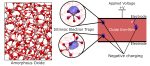 Modern computer technology depends on nanoscale electronic devices. These devices rely on extremely thin layers of insulating materials which are in contact with metal or semiconducting electrodes. Many of these layers are amorphous, meaning their atoms are arranged in a disordered structure rather than the regular atomic patterns found in crystals. We use advanced atomistic computer simulations to investigate how this atomic disorder influences the behaviour of amorphous alumina, a material widely used as an electrical insulator… Read more: Role of Intrinsic Electron Trapping in Negative Charging of Amorphous Alumina
 - Crown Ether-Based Ion-Selective Organic Semiconductors by Molecular Design
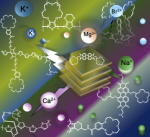 This article reviews how scientists are designing organic semiconductor materials that can selectively recognize metal ions such as sodium and potassium. By incorporating crown ether “molecular receptors” into these materials, ion binding can trigger changes in colour, light emission, or electrical conductivity, opening new opportunities for chemical sensing, bioelectronics, and health-monitoring technologies. Authors: Blair G. Hirst, Leila Pooriakia, Kalidass Kollimalaian, Christian B. Nielsen DOI: https://doi.org/10.1002/cphc.70419
 - Phospholipid Saturation Modulates Cholesterol Partitioning and Heat Transport in Lipid Bilayers under Thermal Gradients
 How do cell membranes respond to heat? Cell membranes are not passive barriers; they are dynamic, organised structures whose composition can change in response to their environment. In our study, we used molecular simulations to explore how cholesterol moves within membranes when one side is warmer than the other, a situation relevant to natural heat production in cells and to thermal therapies for cancer. We… Read more: Phospholipid Saturation Modulates Cholesterol Partitioning and Heat Transport in Lipid Bilayers under Thermal Gradients
 - A Magnetically Bistable Rigid Carbene─2,3-Benzofluorenylidene
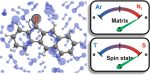 This work reveals how an unusually rigid carbene can be trapped at ultralow temperature in two distinct electronic states, known as singlet and triplet, which differ in both their magnetic properties and chemical behaviour. By combining low-temperature ultraviolet-visible, infrared and electron paramagnetic resonance (EPR, a magnetic spectroscopy technique) measurements with advanced multiscale calculations, we showed that the surrounding environment plays a decisive role in determining… Read more: A Magnetically Bistable Rigid Carbene─2,3-Benzofluorenylidene
 - Modifying polyelectrolyte charge density and surface coverage for enhanced polyelectrolyte-surfactant lubrication of biomimetic interfaces
 Hair care products like shampoos and conditioners work by depositing charged polymers and surfactants onto hair to make it feel smooth and reduce friction, but exactly how these ingredients need to be designed for best performance hasn’t been fully understood. This study used computer simulations (coarse-grained molecular dynamics) to test how a plant-based conditioning polymer called cationic guar performs when combined with a common cleansing… Read more: Modifying polyelectrolyte charge density and surface coverage for enhanced polyelectrolyte-surfactant lubrication of biomimetic interfaces
 - Understanding the photochemistry of a crystalline push–pull norbornadiene photoswitch
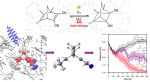 Capturing solar energy in chemical bonds and releasing it on demand is a promising route towards a sustainable energy future. So-called Molecular Solar Thermal (MOST) materials achieve exactly this: functional molecules based on molecular photoswitches absorb sunlight, twist into a high-energy “charged” metastable isomer, and later relax back, releasing the stored energy as heat on demand. Solid, crystalline MOST materials are especially attractive because they… Read more: Understanding the photochemistry of a crystalline push–pull norbornadiene photoswitch
 - Leveraging transfer learning for accurate estimation of ionic migration barriers in solids
 Machine learning for faster discovery of ion-conducting materials Fast ion transport underpins key technologies such as batteries, fuel cells and sensors, but it is difficult to probe experimentally and expensive to model with conventional atomistic simulations. In this collaborative work between UCL and the Indian Institute of Science (IISc) Bengaluru, we use machine learning to overcome this bottleneck. Because high-quality data for ionic migration barriers… Read more: Leveraging transfer learning for accurate estimation of ionic migration barriers in solids