
- This event has passed.
TYC Seminar: Ion-Specific Interactions in Nanoconfinement: Insights from Clay-like Materials
1 December 2025 @ 4:00 pm – 5:00 pm
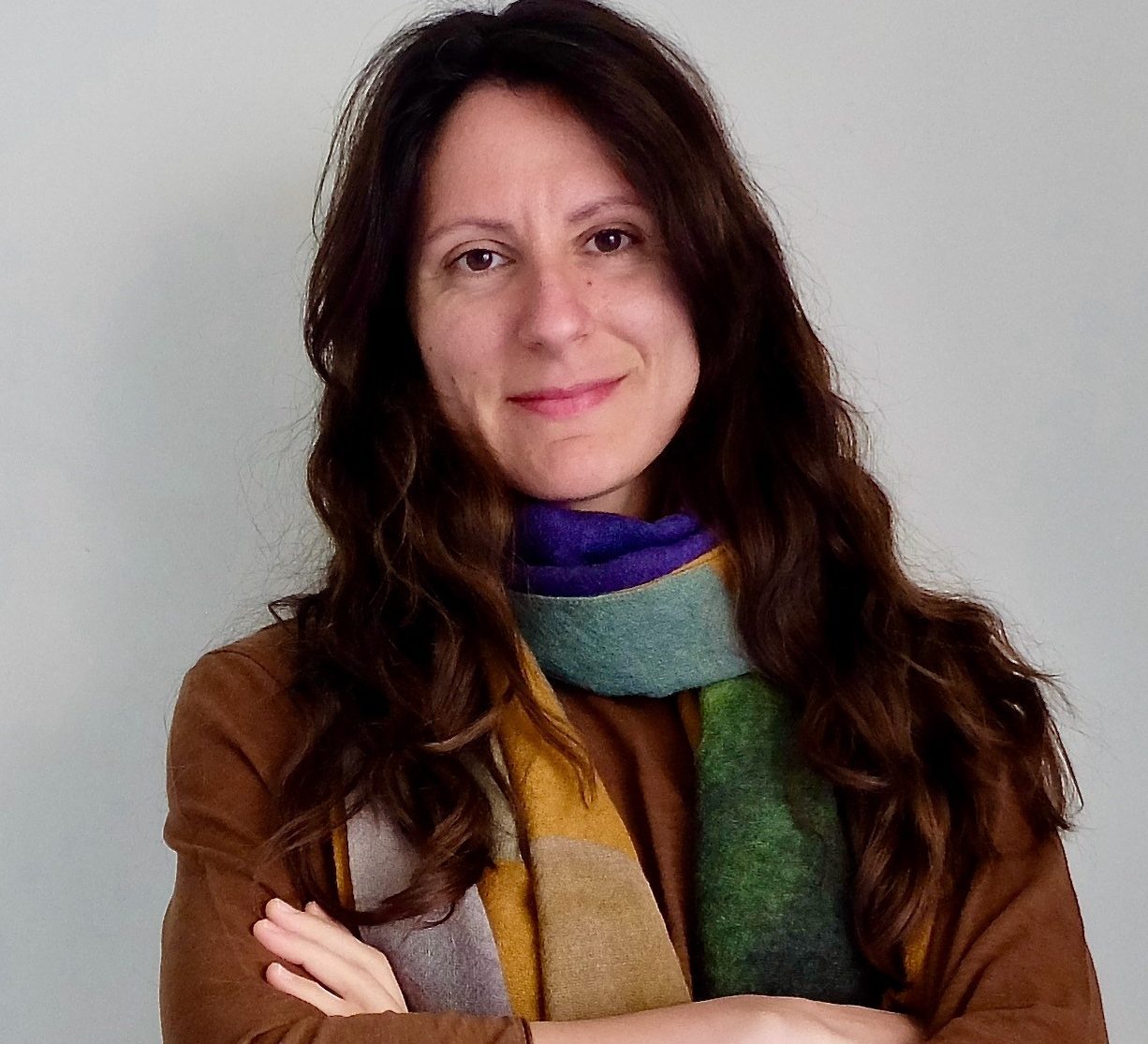
Dr Katerina Ioannidou, CNRS & University of Montpellier
Katerina Ioannidou is a CNRS Research Scientist at the Laboratory of Mechanics and Civil Engineering (LMGC), University of Montpellier. She holds a degree in Physics from the National and Kapodistrian University of Athens and a PhD in Science from ETH Zurich. Before joining CNRS, she was a postdoctoral researcher in the Department of Civil and Environmental Engineering at MIT.
Her research focuses on the physics of porous and disordered materials, with an emphasis on reactive systems such as cement hydrates, clays, and geopolymers. She combines statistical-physics modelling, granular and soft-matter simulations, and 3D imaging and mechanical characterisation to understand how evolving microstructures control macroscopic mechanical and transport properties. Her work aims to establish predictive, multi-scale frameworks for materials that are structurally complex and undergo continuous chemical or environmental transformations.
In 2024, she was awarded the CNRS Bronze Medal for her contributions to the multi-scale physics of amorphous and reactive materials.
Title: Ion-Specific Interactions in Nanoconfinement: Insights from Clay-like Materials
Abstract: Clays provide an archetypal example of matter under extreme confinement, where charged surfaces, hydration layers and ion-specific interactions create forces that cannot be captured by continuum theories. In this talk, I will use clays and clay-like systems as a model to explore how molecular interactions shape mesoscale structure and macroscopic behavior in charged disordered materials.
I will show how potentials of mean force extracted from atomistic simulations reveal the subtle role of hydration structure, dielectric response and counter-ion identity in controlling swelling forces and aggregation. Using imogolite nanotubes and layered aluminosilicates as case studies, I will demonstrate how nanoscale mechanisms translate into mesoscale cohesion, network formation and mechanical response. Finally, I will discuss how similar ideas underpin other reactive or confined materials such as cement hydrates, nanoporous carbons and cohesive granular assemblies, providing a unified physical framework for ion-mediated interactions in disordered solids.
The goal is to illustrate how multiscale modelling—from molecular simulations to coarse-grained descriptions—can reveal the physics of confined electrolytes and emergent cohesion in a broad class of soft and porous materials.
 Google Calendar
  iCalendar