Orthogonal Quantum Many-Body Scars
https://journals.aps.org/prl/abstract/10.1103/PhysRevLett.127.150601
THE LONDON CENTRE FOR THE THEORY & SIMULATION OF MATERIALS & MOLECULES
THE LONDON CENTRE FOR THE THEORY & SIMULATION OF MATERIALS & MOLECULES
https://journals.aps.org/prl/abstract/10.1103/PhysRevLett.127.150601
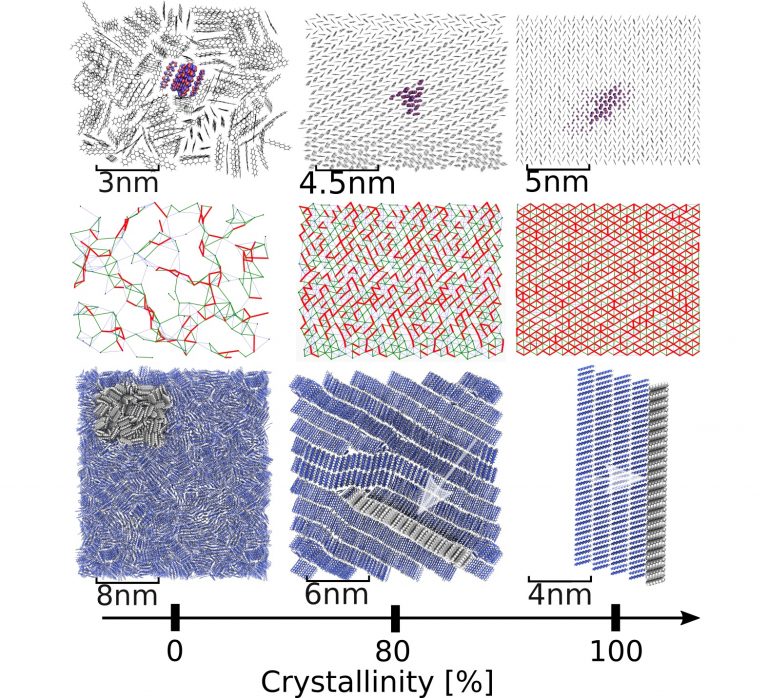
Here, the group of Jochen Blumberger contributed the the modelling and molecular interpretation of ultrafast pump-probe spectrocopy experiments carried out by collaborators at the University of East Anglia. The team reports exceptionally high rates for heme-to-heme electron transfer, on the…
https://onlinelibrary.wiley.com/doi/10.1002/adma.202104852
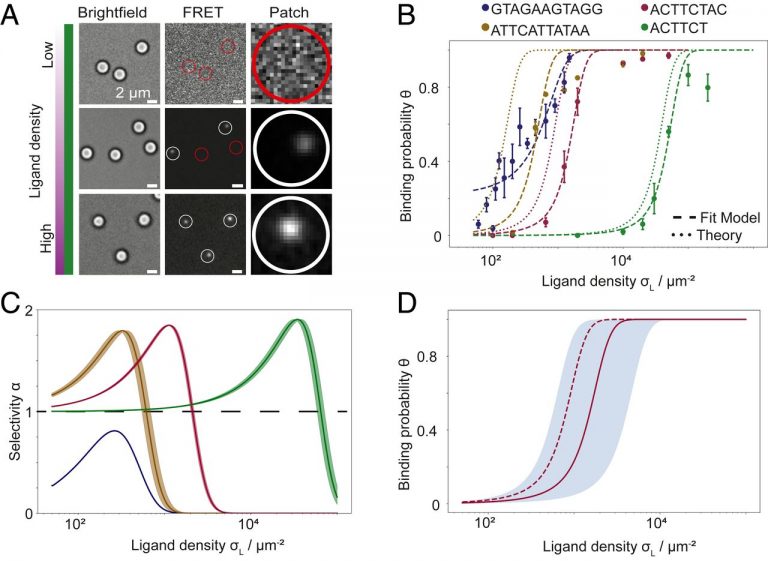
Researchers from the University of Cambridge, University College London, Imperial College London and Charles University in Prague have developed a powerful machine learning based procedure for molecular simulations of complex systems. The results, reported in the journal PNAS, open the…
Molecular cages have potential as enzyme-mimics and in applications such as catalysis, drug-delivery and sensing. Recently, chemists have attempted to introduce more complexity into their structures in an attempt to emulate Nature’s success with proteins and enzymes. However, it can…
https://www.pnas.org/content/118/36/e2106036118/tab-article-info
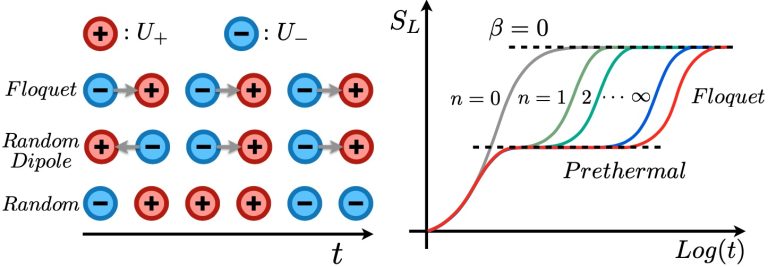
In the last decade researchers have realised that simply shaking a collection of quantum particles can give rise to new phases of matter without any counterparts in undriven equilibrium systems. However, most of these are rather delicate and require a…
Today’s quantum computers are small and noisy. Hybrid quantum-classical algorithms aim to make use of these limited devices by pairing them with classical computing and assigning specialized tasks to the quantum hardware (e.g. measuring the energy expectation value of a…

Perovskite-inspired materials aim to replicate the optical and electronic performance of the famous lead-halide perovskites, while eliminating issues with stability and toxicity. In this work, we focused on an emerging material in the class of mixed-metal chalcohalides; Sn2SbS2I3, which recently…
This work was part of a long-term collaboration between the groups of Charles Sykes (Tufts University), Angelos Michaelides (former TYC Director and Professor at UCL, now at the University of Cambridge) and Michail Stamatakis (UCL). Notably, this collaboration was fostered…